Table of Contents

Why Nextcloud?
Nextcloud has been installed more than 400,000 times, making it the most widely-used on-premise content collaboration platform you can get your hands on. From tiny setups like a Raspberry Pi serving just 2 users to massive global operations supporting tens of millions, Nextcloud handles it all smoothly.
So, what’s behind its popularity? It’s not magic-it’s flexibility, scalability, and a user-friendly approach that makes every deployment feel tailor-made. Whether you’re running a small team or powering huge enterprises, Nextcloud adapts without breaking a sweat.
For Rabata’s secure cloud storage users, Nextcloud offers a reliable backbone that combines control with convenience, ensuring your files are always close, safe, and exactly where you need them.
Features
Location Hints
When setting up a new bucket in Rabata, you can add Location Hints. These optional pointers help the system guess where most of your data access will happen geographically. It’s like telling your storage where your friends live so it can send data their way faster and smoother.
CORS
Cross-Origin Resource Sharing, or CORS, is your gateway to seamless interaction with your bucket’s objects from different domains. Rabata lets you tailor these rules so you can decide exactly how external applications talk to your data. Think of it as controlling who gets to peek into your storage party and who has to stay outside.
Public buckets
Need to share your storage treasures with the world? Making a bucket public in Rabata means its content becomes openly accessible on the Internet. Perfect for websites or apps that need to serve images, videos, or files to anyone, anytime, no gatekeeping involved.
Bucket scoped tokens
For those who like fine-tuned access control, Rabata offers bucket scoped tokens. These tokens work like personalized keys granting specific users permission to access your data on a granular level. You control who gets in and what they can touch, keeping your valuable information safe yet accessible when needed.
Box
Dropbox often steals the spotlight when it comes to cloud storage, but you simply can’t talk about this space without mentioning Box. Both companies offer very similar services, matching each other feature for feature and price point for price point. Choosing between them usually boils down to what feels right for you - kind of like picking your favorite coffee brand.
Developers face a similar dilemma. Box’s developer platform, Boxdev, is impressively comprehensive. It comes with SDKs that cover Java, .Net, Python, Node, and iOS. On top of that, Boxdev offers prebuilt UI components, smoothing out the coding experience and saving precious hours. The competition doesn’t stop there. In 2021, Box launched developer APIs for Box Sign, their e-signature tool, leveling the playing field with Dropbox’s developer environment and making it a neck-and-neck race.
Boxdev isn’t just about the tools - it’s about guiding you through the jungle of APIs. Whether you’re a newbie or a seasoned coder, Boxdev offers detailed guides and an extensive reference to all resources and endpoints. It’s like having a roadmap while exploring a complex city, only without the hassle of paper maps.
- Start building with Box Platform
- API profile
Is Cloud Storage Good for Development?
Thinking about using cloud storage for your coding projects? You're not alone. Many devs wonder if setting up their main development folder in services like Dropbox or OneDrive is a smart move. Sounds convenient, right? But how does it really hold up when you're deep in the coding zone?
Picture this: a neat folder structure stored entirely in the cloud. Sounds dreamy. But the real question is, can you work directly from the cloud without lag or frustration? Or should you stick to local copies and just use the cloud for safety backups?
Here’s the thing. Coding from the cloud often comes with surprises - like sync delays, conflicts, or your IDE freezing just when you’re about to hit save. For anything more than tiny projects, that can quickly turn your workflow into a nightmare.
Most experienced developers keep their active code on their local machines. They rely on tools like Git to version and manage their work. The cloud then plays the role of a trusty sidekick - backing up files, syncing progress across devices, and sharing code when needed.
At Rabata, we’ve seen this play out countless times. Direct development from the cloud? Great idea on paper, but less so in practice. Instead, use a hybrid approach: code locally, sync smartly, and back up regularly.
A good setup might be working locally with your IDE while your changes get pushed automatically-via scripts or triggers-not only to cloud storage but also to remote Git repositories like GitHub or GitLab. This way, you enjoy fast local editing, cloud peace of mind, and robust version control all in one.
Security is no joke, either. Before you toss your source code into the cloud, make sure it’s locked down tight. Strong encryption and cautious handling of sensitive data are musts. Some cloud storage providers also offer developer-friendly features like file versioning - handy for rolling back if something goes sideways.
In short, cloud storage at Rabata is a powerful tool when used as part of a larger system. It’s excellent for backups, sharing, and syncing, but wouldn’t recommend it as your sole development environment. Your code deserves a smooth and speedy workflow, and that usually means local editing with cloud-powered support on the side.
Take it from a developer who’s been there: Dropbox can handle small snippets just fine, but larger projects? Prepare for syncing headaches. The moral of the story? Keep your main work local, use Git for version control, and let cloud storage do what it does best - keep your work safe.
Systems backup and recovery
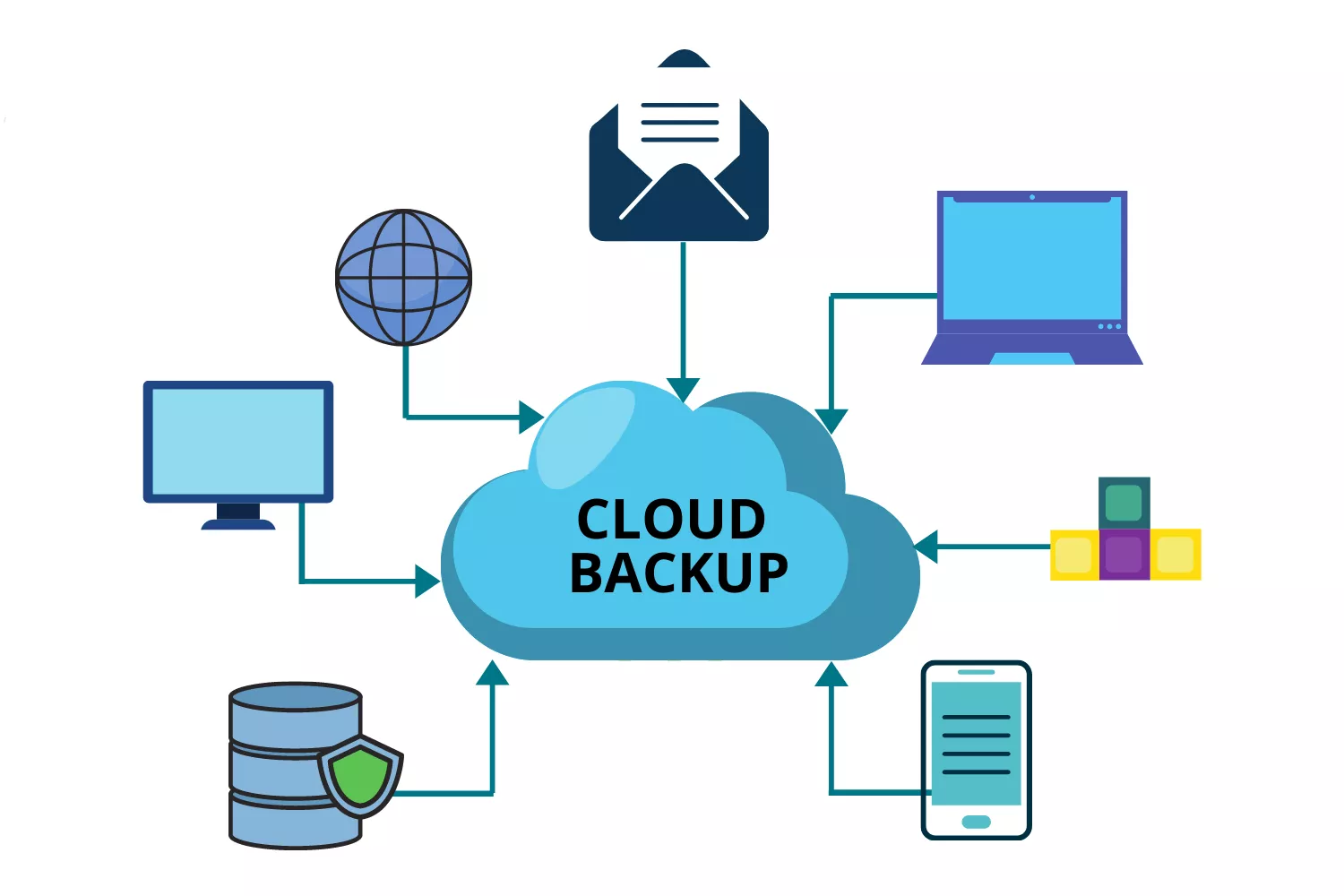
When it comes to safeguarding your money-making tech, there’s no room for second best. Rabata’s cloud backups stand firm and unshakeable - they’re immutable, meaning once your data is saved, it simply can’t be tampered with or altered. Think of it as a digital vault that won’t let anything sneak past.
But protection isn’t enough if you can’t bounce back fast. Rabata doesn’t just store your backups securely; it ensures they’re ready to be recovered in a flash. That way, your systems stay resilient, your operations don’t miss a beat, and downtime becomes a thing of the past.
Best Cloud Tools for Software Development
In today's fast-paced software development world, cloud-based tools have become the secret sauce behind many successful projects. There’s an ocean of options out there, each with its own superpowers, quirks, and pricing plans. At Rabata, we’ve sifted through the noise to highlight some of our favorite cloud platforms and tools that keep development smooth, agile, and dare we say - even fun. So buckle up and dive in!
Amazon Web Services
When it comes to cloud computing giants, Amazon Web Services (AWS) consistently steals the spotlight. It’s packed with an arsenal of functionalities like storage, computing power, networking-you name it. Software teams flock to AWS because it lets you pay only for what you use. No extra charges for taking a break or for that one weekend sprint.
But the real magic of AWS lies in its toolkit. From spinning up virtual servers with EC2 to storing endless files in S3, or even scaling your infrastructure automatically when your project unexpectedly goes viral - AWS handles it like a pro. And it doesn’t stop there. There's DynamoDB for your databases, Lambda for serverless code execution, RDS for relational databases, and Firewall Manager to keep your stuff locked up tighter than Fort Knox.
- EC2
- S3
- DynamoDB
- Lambda
- RDS
- EC2 Auto-scaling
- Firewall Manager, and more
Microsoft Azure
Microsoft Azure is the other heavyweight contender loved by developers around the globe. It’s a robust cloud platform offering storage, compute power, and networking services similar to AWS, but with that unique Microsoft twist. If you’re already embedded in the Microsoft ecosystem, Azure feels like home.
Just like AWS, Azure runs on a pay-as-you-go model. This means your wallet won’t get surprised by some mysterious cloud monster when the billing cycle rolls around. Azure’s toolbox is equally impressive, with Active Directory for identity management, CDN for speedy content delivery, Data Factory to wrangle your data, CosmosDB for globally distributed databases, Azure DevOps for your CI/CD pipelines, and more. It’s like having a Swiss army knife for software development.
- Active Directory
- CDN
- Data Factory
- CosmosDB
- Azure DevOps
- Virtual Machine
- Azure SQL
- Azure Function
Google Cloud Platform
Google Cloud Platform (GCP) is another major player that’s captured the hearts of many developers, especially those who love Google’s approach to AI and data analytics. Along with foundational services like storage and networking, GCP shines with its advanced tools in machine learning, analytics, and payment gateways.
Just like its siblings AWS and Azure, GCP charges you based on your actual usage, making overpaying almost impossible if you keep an eye on your consumption. Their toolset ranges from Compute Engine for virtual machines, Cloud Storage for your data, Google Kubernetes Engine for container orchestration, to highly specialized goodies like Translation AI, Deep Learning Containers, and BigQuery for lightning-fast data queries.
- Compute Engine
- Cloud Storage
- Cloud SDK
- Google Kubernetes Engine
- Dataflow
- Cloud Functions
- Translation AI
- Deep Learning Containers
- BigQuery
- Payment Gateway
While these three titans dominate the cloud landscape, software projects can be quirky beasts. Not every project fits neatly into a single cloud “universe.” Some demand high customization, others thrive on specialized tools outside the big three. That’s why at Rabata, we also keep an eye on other gems tailored for specific development needs.
Code Management
Version control is the backbone of organized development. Hosting your code in the cloud means you get seamless collaboration, history tracking, and a place to stash your latest brilliant (or, let’s be honest, sometimes questionable) ideas.
Github is like the social network for developers: free for individuals and organizations, a treasure trove of open-source projects and libraries to supercharge your work. It’s where innovation meets community.
Bitbucket, Atlassian’s answer to code hosting, blends code management with firm teamwork. Its free and paid tiers flex based on your team’s size and demands, all while supporting efficient workflows and smooth team interactions.
Then we have Heroku-a platform that lets developers build, run, and manage apps entirely in the cloud, freeing them from the nitty-gritty of infrastructure management. Deploying code has never been easier or more satisfying.
Cloud Tools for Project Management
Keeping projects on track can be a juggling act. Thankfully, cloud-based project management tools bring order to chaos and keep teams humming.
Jira by Atlassian is a veteran in the game, offering customizable workflows, powerful issue tracking, and bug management. What started as a simple ticketing tool has evolved into a versatile platform accommodating modern Agile methodologies and complex processes.
Asana is the friendly organizer that helps teams up to 15 collaborate without missing a beat. Its intuitive interface and free tier make it a staple for managing projects, big or small.
Trello keeps things visual and flexible. Perfect for individuals and small teams on a budget, it lets you create custom workflows with drag-and-drop simplicity, scaling up as your team grows.
Cloud-Based Software Documentation Tools
Documentation doesn't have to be a dull afterthought. These cloud tools help teams collaborate, document, and keep everyone on the same page without endless email chains or lost files.
Confluence, again from Atlassian, blends documentation with collaboration. It integrates smoothly with other Atlassian tools so your project’s knowledge hub is always just a click away.
Read the Docs takes an open-source approach, automating versioning and hosting of documentation while tracking changes meticulously. It’s like having a personal librarian for your project manuals.
So there it is - a curated collection of cloud tools that power software development teams. Rabata knows that the perfect fit depends on your project’s unique needs, budget, and quirks, which is why we always recommend experimenting, mixing, and matching until you find your cloud soulmate.